
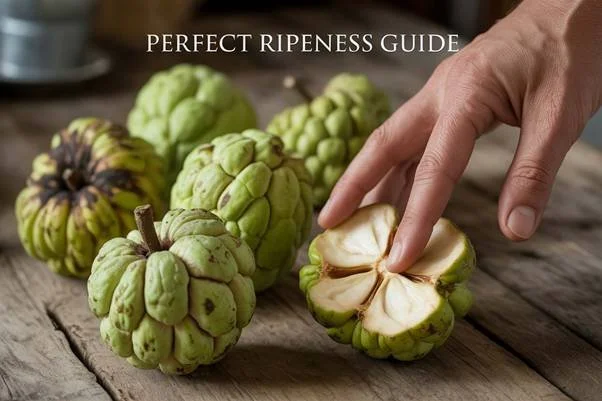
How to Tell if a Custard Apple (Cherimoya) is Ripe and Ready to Eat
As per proper selection methods, knowing how to check if custard apple is ripe will give you sweet and creamy fruit instead of bad taste. Regarding ripeness, correct identification makes the difference between good and disappointing eating experience. As per fruit buying experience, this special fruit called cherimoya does not ripen like normal market fruits, making it difficult for both new buyers and experienced people regarding proper selection.
As per this guide, you will learn the visual signs that show perfect ripeness and touch methods regarding when your custard apple is ready to eat. You will learn about smell signs that show when fruit tastes best and proper storage methods as per home conditions. Regarding unripe fruits, these techniques help them reach full flavor potential.
Visual Signs That Indicate Perfect Ripeness

Look for Uniform Yellowish-Green Skin Color
We are seeing that the skin color change is only the first and most reliable sign to know if custard apple is ripe. As per ripeness standards, a cherimoya shows yellowish-green color that spreads evenly on the whole fruit. As per the fruit maturation process, the color changes slowly from dark green to light golden-green shade. This color shift happens gradually regarding the ripening stages.
When buying custard apples, definitely avoid the deep green ones because they actually need more time to become sweet and soft. As per ripening process, the cherimoya fruit will lose its bright green color and become softer with yellow shades showing through. Regarding proper ripeness, the fruit should have a dull green appearance with clear yellow undertones.
Look for fruits that have brown patches or dark spots covering large areas on the skin itself, and check further for any signs of damage. Some darkening is actually normal, but when the fruit turns brown everywhere, it definitely means it’s too ripe. We are seeing that the best custard apples for eating right away have only that same yellowish-green colour without any gray or dull spots.
Check for Slight Give When Gently Pressed
Your hands are actually very good tools for testing if custard apple is definitely ready to eat. Further, we are seeing that a ripe cherimoya will feel soft when you press it gently, only like how a good avocado feels when it is ready to eat. When you hold the fruit in your hand and press it gently with your fingers, we are seeing that the skin should give a little but it should not feel too soft or mushy only.
The touch test actually works because the inside flesh is definitely changing from hard and starchy to soft and creamy when the fruit gets ripe. Moreover, basically, the cell walls break down slowly, creating the same smooth texture that makes cherimoyas so popular. If the fruit feels very hard when you press it, it surely needs more time to become ripe, and moreover, you should wait before eating it. Surely, the item should be stored at room temperature with daily checking until it develops a soft texture. Moreover, this gentle yielding indicates proper ripeness has been achieved.
Be careful not to press too hard during the ripeness test, as this can further damage the fruit itself. Custard apples actually have soft skin that gets damaged easily, and too much pressure will definitely spoil the fruit even when it’s ready to eat. Basically, use the same soft touch like when you check if a peach is ripe.
Identify Natural Skin Darkening and Soft Spots
Some skin darkening is actually completely normal and definitely shows that custard apples are ripe and ready to eat. As per natural ripening process, look for small scattered dark spots or patches regarding fruit maturity. These dark spots actually feel softer than the other skin and definitely show that the fruit’s sweetness is developing well.
As per fruit inspection, the main point is telling the difference between normal ripening marks and bad decay spots regarding fruit quality. Good dark spots on ripe cherimoya are actually small and clear, and they definitely don’t smell bad. As per normal conditions, they may feel a bit raised or rough but should not be squishy or wet regarding touch.
However, avoid soft areas that feel mushy or look sunken, and further check that the fruit itself has no mold growth. These actually show the fruit is definitely too ripe or starting to go bad. Actually avoid custard apples with big dark spots that cover most parts, as these definitely mean the fruit has gone bad and is not good to eat.
Recognize When the Fruit Yields to Thumb Pressure
The thumb pressure test is the most accurate way to check if custard apple is ripe. This method itself gives further clear results about the fruit’s readiness. Surely, you should place your thumb gently on various parts of the fruit and apply steady, moderate pressure. Moreover, this technique helps assess the fruit’s ripeness effectively. A ripe cherimoya will give slightly when pressed with your thumb but will not leave a mark on the fruit itself, and this indicates it is ready for further consumption.
This method helps us find the exact time when we are seeing the fruit becoming fully ripe only. The inside part should actually feel soft and creamy, but it definitely should not be completely liquid. As per normal skin condition, when you lift your thumb, the skin should come back to its original shape with only a light mark that goes away quickly.
The custard apple actually ripens unevenly, so you should definitely check different spots on the fruit to test if it is ready. The area near the stem ripens first, while the bottom part itself takes one or two days further to ripen completely. Moreover, as per the ripeness check, when the whole fruit becomes soft under gentle thumb pressure, you can eat the cherimoya at its best time regarding taste and quality.
Touch and Feel Methods to Test Readiness

Apply Gentle Pressure to Detect Softness
We are seeing that gentle pressing is only the best way to check if custard apple is ripe. Basically place the fruit in your palm and press lightly with your thumb on different spots – it’s the same simple method for checking ripeness. A ripe cherimoya will actually give a little when you press it, definitely like how a ready avocado feels soft when you touch it.
Further, as per the proper method, press near the widest part of the fruit regarding the thickest flesh area. The perfect custard apple should surely feel soft when pressed gently, but it should not leave any permanent marks on the surface. Moreover, the fruit must yield slightly under pressure without becoming too mushy or damaged. Also, if the fruit feels very hard and does not move when pressed gently, it needs further time to ripen itself. Also, if your finger goes deep into the fruit or makes marks that stay, the fruit is surely overripe. Moreover, such soft flesh shows the fruit is no longer good to eat.
Also, we are seeing that the main thing is to be gentle only – you should not press the fruit too hard. You should surely apply the same gentle pressure that you would use when checking if a peach or pear is ripe. Moreover, this light touch will help you assess the condition properly. Excessive force will surely damage the soft inner flesh and create brown spots. Moreover, this bruising affects both the taste and texture of the fruit.
Feel for the Right Texture Without Bruising
Basically, checking if custard apple is ready needs gentle handling and the same careful method to avoid damage. Also, surely, one should run fingers lightly over the fruit’s surface to feel for small changes in skin texture. Moreover, this gentle touch helps identify any variations in the fruit’s outer layer. A ripe cherimoya’s skin will surely feel soft when pressed gently, and moreover, it becomes flexible as the fruit ripens from inside.
The rough, scale-covered outer skin will surely feel softer than it was during the unripe stage. Moreover, this reduced firmness indicates proper ripening of the fruit. You will notice that the skin segments become more pronounced and can be distinguished further as the fruit ripens itself. The fruit’s inside structure actually breaks down naturally, which definitely makes it softer and ready to eat.
Basically, don’t use your nails or press too hard with your fingers because it’s the same as making holes in the skin and letting bacteria get inside. We are seeing that you should only use the soft parts of your fingers to gently roll the fruit in your hands. We are seeing that a good ripe custard apple will feel heavy but not too hard, and the soft inside is only ready to eat when it feels right.
A ripe cherimoya will actually feel slightly warmer than an unripe one when you touch it at room temperature. You should definitely check the temperature to know if it is ready to eat. We are seeing that this warmth only shows the fruit is getting ripe from inside.
Test Firmness Around the Stem Area
The stem end of custard apple itself shows important details about the fruit’s ripeness, which helps further in determining if it is ready to eat. This area surely becomes soft first and can work as an early sign that your cherimoya is reaching perfect ripeness. Moreover, checking this spot helps you know when the fruit is ready to eat. We are seeing that you should press the stem area gently with your thumb – this part only will be soft when the fruit is ready to eat.
You should surely look for a small dip or soft area where the stem was connected. Moreover, this depression indicates the natural attachment point. We are seeing that this natural dent becomes more clear when the fruit gets ripe, and the area around it will feel much softer than the sides or bottom part only. The stem area surely works as a ripeness indicator that shows the exact progress of fruit softening. Moreover, this method helps determine the current stage of the ripening process.
Do not press hard near the stem area, as this part itself is very weak in ripe custard apple. Further, gentle handling around stem is needed to avoid damage. We are seeing that too much pressure at this place can only break the skin or make a way for damage to start. As per the condition of the stem area, if it feels soft or has dark wet spots, the fruit is over-ripe and should be eaten right away or thrown out.
Further, a ripe cherimoya has a soft stem area that gives under light pressure but keeps its shape itself. Further, it should not be too squishy or mushy. We are seeing this balance shows the fruit has reached the best ripeness without becoming too ripe only.
Smell Indicators of a Ripe Custard Apple

Detect the sweet, tropical fragrance
Basically, when you want to check if custard apple is ripe, your nose is the same as the best tool you can use. Also, a fully ripe cherimoya surely gives off a special sweet smell that is tropical in nature. Moreover, this fragrance becomes easy to recognize once a person knows what to look for. The smell develops further as the fruit becomes ripe, changing from having no smell to being very fragrant itself.
A ripe custard apple surely has a sweet smell that mixes vanilla, pineapple, and banana flavors. Moreover, it also contains light strawberry notes in its fragrance. Some people actually say it smells like mixed tropical fruits or definitely like a sweet creamy dish. The complex smell itself makes it easy to know when the fruit is fully ripe, and this helps further in identifying the perfect time for harvest. We are seeing that the sweet smell of the fruit shows how much sugar is inside it, so fruits with stronger sweet smell only have better taste.
Basically, you’ll smell the tropical fragrance most when you bring the fruit close to your nose, especially near the stem area where the same aromatic compounds are strongest. Basically, if the smell is too strong or sweet, it’s the same sign that the fruit is overripe. We are seeing that you should only look for a nice, sweet smell that makes you want to cut the fruit right away.
We are seeing that temperature only affects how well you can smell these things. Basically, custard apples smell better at room temperature, so if you kept them in the fridge, wait 30 minutes before checking the same smell.
Identify the floral aroma near the stem
We are seeing that the stem part of custard apple gives the strongest smell when we check if it is ripe only. The area where the fruit connects to the tree surely has the most volatile compounds that make cherimoya’s special smell. Moreover, this attachment point contains the highest concentration of fragrance-creating substances. As per the ripeness check, you should focus on this specific area regarding custard apple. This gives the clearest sign if the fruit is ready to eat.
A ripe cherimoya surely develops a gentle flower-like smell near its stem. Moreover, this pleasant scent mixes well with the sweet tropical fragrance of the fruit. As per the fragrance profile, this flower smell is soft and refined regarding its intensity – it is like jasmine or orange flower but much lighter. The floral and fruity smells combine together to create the main scent that shows the fruit itself is perfectly ripe and ready for further use.
To actually check this smell properly, you should definitely put your nose close to the stem part and breathe in slowly. The floral notes should be there but not too strong, and this balance itself helps the fragrance develop further without overpowering the senses. If you smell any sour, fermented, or alcoholic odors near the stem, the fruit has surely gone bad and will not taste good. Moreover, such fruits should be avoided as they have passed their best eating stage.
We are seeing that the stem area only shows us important details about what is inside the fruit. We are seeing that a good custard apple will only have a nice flower smell with no bad smells. Bad or moldy smells surely show that the fruit is getting spoiled, and moreover, if there is no smell at all, it means the fruit needs more time to become ripe.
Recognize when the scent becomes pronounced
Timing surely helps us know when a custard apple smells just right for eating. Moreover, the perfect smell tells us the fruit is ready to eat. Basically, the smell changes follow the same pattern that people who eat lots of fruits learn to know. An unripe cherimoya itself has no smell, and further pressing it to your nose will not give any fragrance.
As per the ripening process, the fruit will start becoming sweet after keeping it at room temperature for 2-3 days. This first stage surely creates a very light smell that needs careful checking to find. Moreover, one must look closely to notice this gentle aroma. We are seeing the smell getting stronger day by day, and it only becomes very strong when the fruit is fully ripe.
Also, as per proper ripeness standards, a custard apple should smell sweet from 6 inches away. Regarding the ideal intensity, you can easily detect the tropical fragrance when the fruit is perfectly ripe. Basically at this point, the smell is rich and nice but not too strong – it’s the same inviting feeling without being too much. You actually don’t need to put the fruit right on your nose to smell it – the smell should definitely be clear when the fruit is just near you.
Basically, when the smell becomes too strong in the room or starts smelling fermented, it’s the same as missing the best time to use it. Basically, overripe custard apples smell the same as alcohol because the sugar starts fermenting, and the fruit becomes mushy and bad to eat.
Basically, fruit sellers use a simple trick – if they can smell the custard apple’s sweetness from arm’s length distance, they know it’s the same perfect ripeness that customers want. This method actually helps you pick fruit that is definitely at its best ripeness for maximum taste.
Common Mistakes That Lead to Poor Fruit Selection

Picking fruits that are too hard and unripe
Many people surely choose the hardest custard apple available, believing it represents the best quality. Moreover, this common practice reflects a widespread misunderstanding about fruit selection. This method further creates problems and fails itself every time. Basically, if cherimoyas are rock-hard when you buy them, they won’t ripen properly at home and will stay chalky instead of becoming creamy and sweet the same way ripe ones do.
When you pick a very hard custard apple, we are seeing that the fruit was taken from the tree only too early. These fruits do not have the natural sugars and taste that develop further when they ripen on the tree itself. Even with further waiting at home, the fruit itself rarely develops the rich, tropical taste that makes cherimoyas special.
The skin of an unripe custard apple is actually bright green and definitely does not show any yellow color or other changes. The fruit itself feels very hard and dense when pressed, and it does not give way further like pressing a stone. We are seeing that these visual and touch signs should only serve as warning signals when you are selecting custard apple fruits.
Choosing overripe fruits with dark bruises
Basically, shoppers sometimes choose the same heavily discounted cherimoyas that are already overripe because they cost less. Basically, these overripe custard apples might look cheap, but they have the same problems that make them bad for eating.
Dark brown or black patches on skin actually show that something is definitely going wrong inside the body. These bruised parts further show that the fruit itself has started fermenting or getting bad taste. The texture actually becomes soft and mushy, and it definitely turns watery instead of staying thick like custard.
Overripe cherimoya signs include:
- Basically, the skin shows deep brown or black bruising, which is the same as severe discoloration from injury.
- The affected areas become soft and sunken, and they feel hollow when touched, which further indicates the tissue damage itself.
- Basically, it smells the same as alcohol or something that has gone bad due to fermentation.
- As per medical observations, the skin looks wrinkled or deflated regarding dehydration symptoms.
- We are seeing that fruit which feels too soft all over is only showing signs of being overripe.
Ignoring the natural ripening timeline
Further, basically, custard apples don’t ripen the same way as common fruits like bananas or avocados. Many people want quick results and think the fruit itself will be ready in one or two days after buying. This expectation further leads to disappointment when the fruit takes longer to ripen. Basically, people get impatient and cut open fruits that are not ready, or they throw away good cherimoyas that just need the same waiting time to ripen properly.
As per storage at room temperature, a custard apple takes 3 to 7 days to become fully ripe. As per the conditions, factors like starting firmness, room temperature, and humidity affect this timeline. Regarding the process, all these elements influence the time needed. Basically, if you try to rush the ripening with heat or other tricks, you get the same result – uneven texture and bad taste.
The cherimoya ripening process itself requires patience and cannot be rushed further. We are seeing that fruits which ripen slowly by natural means only develop much better taste than those ripened using artificial methods. Basically, knowing this timing prevents eating the fruit too early and ensures you get the same best experience every time.
Selecting fruits with damaged or cracked skin
Basically, when you see damage on the custard apple’s outside, the same damage goes inside the fruit too, making it bad quality and unsafe to eat. Cracks, cuts, or holes in the skin surely allow bacteria to enter and make the spoilage faster. Moreover, these damaged areas become easy entry points that speed up the decay process. As per fruit damage patterns, small surface harm can quickly spread regarding the entire fruit.
Basically, fruits get split skin when temperature changes too fast or the same happens during bad handling in transport. These damaged areas further become breeding places for mold and other harmful microorganisms itself. Small cracks in fruits surely cause quick spoilage after bringing them home. Moreover, these minor damages can rapidly worsen the fruit’s condition.
Also, smart buyers should further check each custard apple itself carefully to look for these signs.
- Moreover, as per medical standards, the skin should be complete and without any marks or damage regarding proper health condition.
- As per the examination, there are no visible cuts or puncture wounds regarding the body.
- Basically, the stem area should not have any soft spots, which means the same thing as checking for firm texture around that part.
- The coloring should surely be uniform without any dark streaks or patches. Moreover, the surface must maintain consistent color throughout.
- Further, as per requirements, the shape should be proper without any unusual indentations regarding the surface.
To pick ripe custard apple successfully, one must surely find the right balance between hard unripe fruit and soft overripe fruit. Moreover, damaged or spoiled fruits should be avoided completely.
Proper Storage Techniques to Achieve Perfect Ripeness

Ripen at room temperature for optimal results
Getting your custard apple to perfect ripeness actually starts with patience and definitely needs the right place to keep it. Room temperature storage helps achieve the creamy, sweet texture that makes cherimoya itself so appealing, and this method can further enhance the fruit’s natural qualities. As per storage conditions, custard apples take 2-7 days to become fully ripe when kept at 65-75°F temperature. Regarding ripening time, it depends on proper temperature control for best results.
Keep your unripe custard apple on the kitchen counter itself, away from direct sunlight, for further ripening. The fruit will keep ripening on its own, and we are seeing that special enzymes are breaking down the starches into sugars while the flesh becomes soft like custard only. As per proper storage technique, you will know the custard apple is ready when the skin becomes slightly soft regarding gentle pressure applied on it.
As per proper storage methods, do not keep custard apples near hot places like stoves, heaters, or sunny windows. Regarding heat sources, they will spoil the fruit quickly. Also, excessive heat surely causes uneven ripening in fruits, creating soft patches while other parts stay firm. Moreover, this temperature stress leads to poor fruit quality with inconsistent texture throughout. Basically, you need a kitchen spot with good air flow that keeps the same temperature always.
Also, check your fruit daily during the ripening process itself to monitor further changes. Also, a properly ripened cherimoya will have skin that gives slightly when pressed, similar to a ripe avocado itself, and this indicates the fruit is ready for further consumption. The fruit should feel heavy for its size, and further the green color itself will change to yellow or brown depending on the variety.
Speed up ripening with paper bag method
When you want to make custard apples ripen faster, the paper bag method surely works very well. Moreover, this technique speeds up the natural ripening process effectively. This method traps ethylene gas as per the natural process, regarding the hormone that fruits make to start ripening. Put your custard apple in a brown paper bag and fold the top loosely – this will actually trap the ripening gas while definitely allowing some air to move around.
We are seeing that adding only one ripe banana or apple in the bag with custard apple will make it ripen much faster. As per research, these fruits produce high ethylene gas and will make ripening much faster, regarding the time it can reduce by half. This custard apple ripening guide would surely be incomplete without the professional method that fruit vendors have used for decades. Moreover, this technique has proven effective in commercial fruit handling.
Further, we are seeing that the paper bag should only be kept at normal room temperature, and you must check your fruit every 12-24 hours. Don’t use plastic bags because they actually trap too much water and will definitely make the fruit rot instead of ripening properly. The paper actually lets the fruit breathe while it definitely keeps the ripening gases together.
Basically, when the custard apple ripens faster, the same fruit will get small brown spots on its skin. Further, we are seeing this happen normally only, and it shows the fruit is becoming ripe perfectly. The key point is to check the texture itself rather than just looking at the appearance, and this will further help in better results.
Refrigerate only after reaching perfect ripeness
When your custard apple surely becomes ripe, you can moreover use refrigeration to keep it fresh for a longer time. We are seeing that a ripe cherimoya can be kept in the fridge for only 2-3 days, which gives flexibility for when to eat it. Cold temperature surely slows down the ripening process in a significant way. Moreover, this prevents the fruits from getting over-ripened.
Basically, make sure your custard apple is properly ripe before you put it in the fridge – the same way you would check any fruit for ripeness first. The fruit should actually feel soft when you press it gently and definitely smell sweet when it is ready to eat. Putting an unripe custard apple in the refrigerator will stop the ripening process itself and further prevent the fruit from developing its complete taste.
Also, as per storage guidelines, keep ripe custard apples in the main fridge area regarding proper preservation, not in the crisper drawer where moisture levels may be too much. The fruit should surely be placed in a breathable bag or left uncovered. Moreover, this method allows proper air circulation around the fruit. As per storage guidelines, do not keep custard apples near strong-smelling foods regarding odor absorption issues.
| Storage Method | Temperature | Duration | Best For |
| Room Temperature | 65-75°F | 2-7 days | Unripe fruit |
| Paper Bag | 65-75°F | 1-4 days | Accelerated ripening |
| Refrigeration | 35-40°F | 2-3 days | Ripe fruit preservation |
As per proper eating method, keep the refrigerated custard apple at room temperature for 30-60 minutes regarding consumption preparation. This warming period helps the flavors develop further and makes the fruit itself reach the perfect creamy texture.

Basically, finding the perfect custard apple is the same as knowing what signs to check for. As per the visual signs like light yellow color and soft touch when pressed, along with the sweet smell, you can select the best fruit regarding quality every time. As per the ripening process, these fruits will continue to get ripe after you pick them, so no need to worry regarding bringing home unripe fruits.
Patience and proper storage are surely the most important factors. Moreover, these simple steps will guarantee success. Custard apples should surely be stored at room temperature until they achieve optimal softness without becoming overly mushy. Moreover, refrigeration must be used thereafter to decelerate the ripening process effectively. Also, surely one must avoid selecting fruits that are too hard or allowing them to become overripe and soft. Moreover, this common mistake can spoil the eating experience completely. Basically, these simple methods will give you perfectly creamy and sweet custard apples that show the same reason why people love this unique fruit so much.

